About Pancreas and duodenum model
Product Description:
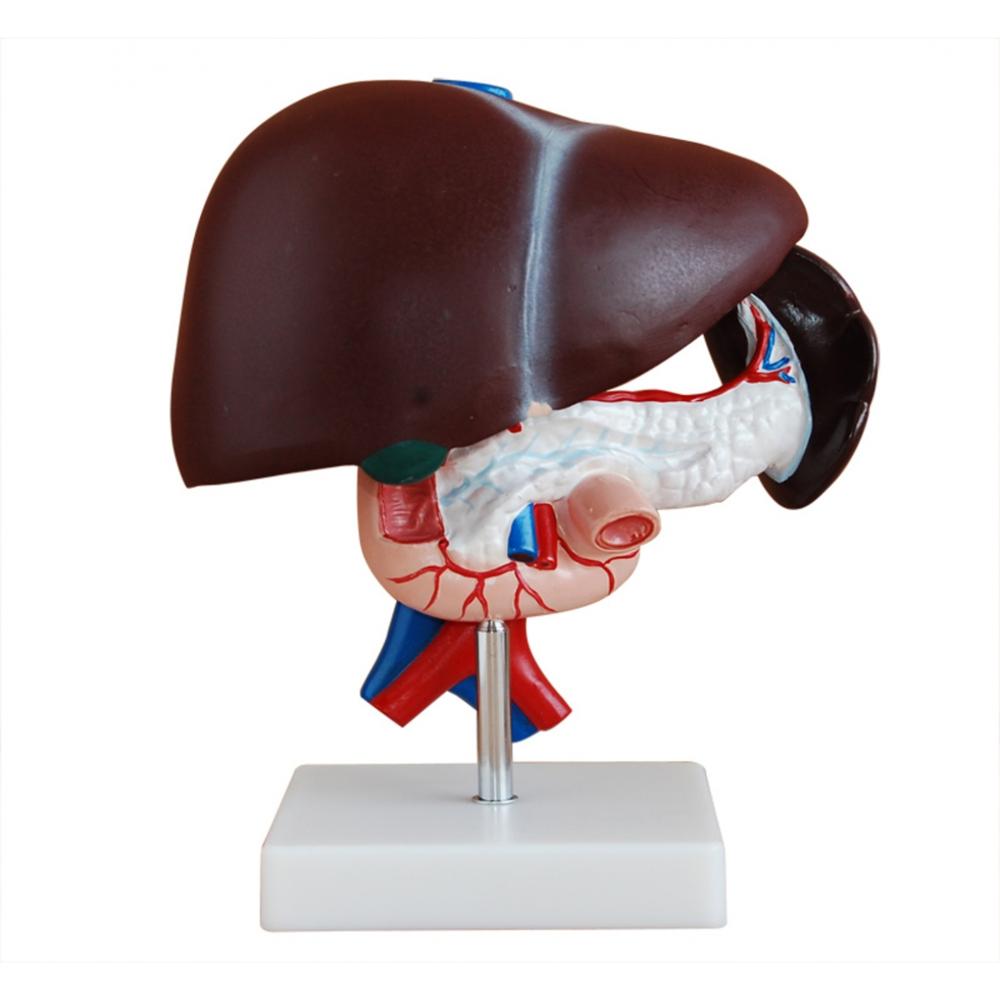
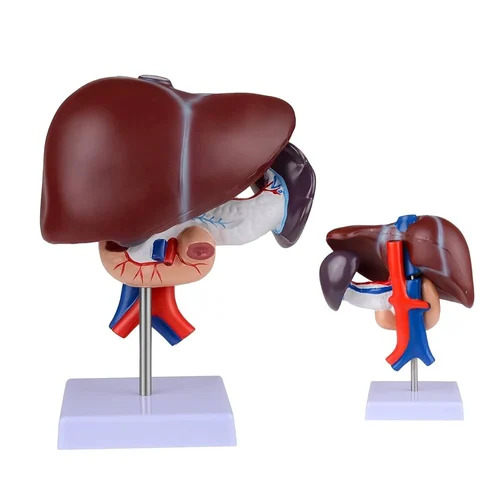
Anatomical model of the human pancreas.
Material: High-quality, medical-grade silicone or PVC; non-toxic, latex-free, durable.
Anatomical Features:
Display: clearly displayed head, body, and tail of pancreas and partially open duodenum
revealing internal structure.
Visibility: Pancreatic and bile duct systems are visible.
Painted in anatomically accurate colors with clear differentiation of ducts, tissues, and
duodenum.
Sectioning: More then 2-part dissectible model for internal study.
Mounting: Durable base or stand for stability.
Cleaning: Waterproof; cleanable with alcohol-based disinfectants and mild detergents.
Dimensions:
Height: 20
Width: 5 head of the pancreas
Thickness: 3 cm
Weight: 1.5-0.5 kg
Standard Accessories:
1 Human pancreas anatomical model
1 Display base or stand
Realistic Anatomical DetailingMeticulously designed to replicate the pancreas and duodenum, this model enables students and educators to study intricate anatomical features with exceptional accuracy. Its realistic texture and coloration aid in visual learning and hands-on practice, making it highly effective for classroom demonstrations and examinations.
Durable Material ConstructionConstructed from medical-grade silicone or PVC, the model is both non-toxic and latex-free, ensuring safety during extended educational use. The robust material selection provides durability, so the model withstands frequent handling in teaching environments without degradation.
FAQ's of Pancreas and duodenum model:
Q: How is the Pancreas and Duodenum Model used in nursing or midwifery education?
A: This model is primarily utilized for anatomical demonstrations, enabling students to visualize and understand the structure and spatial relationships of the pancreas and duodenum. It supports practical learning through hands-on activities and interactive lectures.
Q: What materials are used in the manufacture of the model?
A: The model is made from high-quality, medical-grade silicone or PVC. It is non-toxic, latex-free, and designed for durability, ensuring safe handling during teaching sessions.
Q: When should this anatomical model be incorporated into the curriculum?
A: It is best used during anatomy courses or clinical skill labs where students need a tangible reference to reinforce their learning of abdominal organs, specifically the pancreas and duodenum.
Q: Where can this model be used effectively?
A: The model is suitable for classrooms, laboratories, skill centers, and simulation labs in nursing and midwifery colleges or other medical training institutions.
Q: What process is involved in teaching with this anatomical model?
A: Instructors typically use the model to demonstrate anatomical features, discuss physiological functions, and guide students through clinical procedures related to the pancreas and duodenum. Students can engage in hands-on practice, improving their understanding and retention.
Q: What benefits does the model offer to educational institutions?
A: It enhances student engagement and comprehension, helps bridge theory with practice, and serves as a reliable tool for examination and assessment. Its high durability and three-year warranty further add long-term value for institutions.




 Send Inquiry




 Send Inquiry
 Send Inquiry
 Send SMS


