About Eye with orbit model
Description:
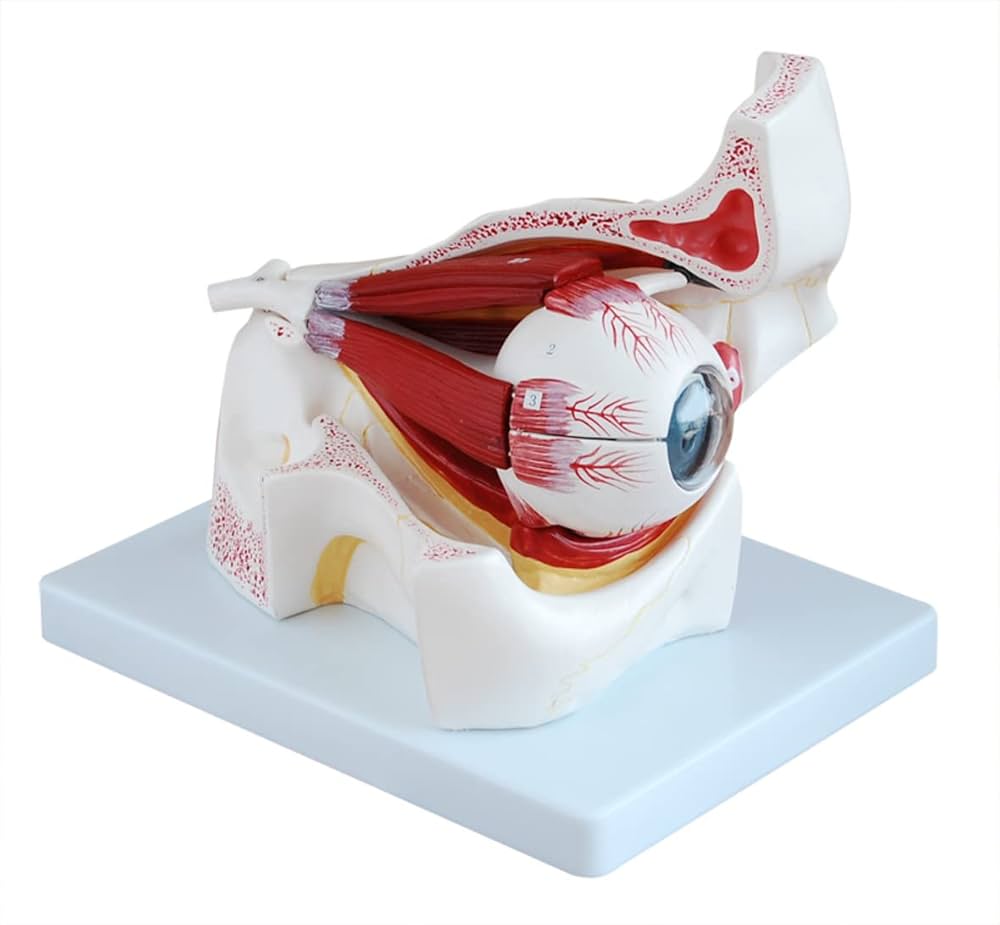
Anatomical representation of the human eye.
Material
Durable, non-toxic, medical-grade PVC or fiberglass
Anatomically accurate with color painted
Enlarged, dissectible 3D model of the human eye with orbit
Demonstrates both internal and external anatomy
Mounted on a stable base stand.
Anatomical Structures Included
Eyeball with cornea, lens, vitreous body, retina, choroid, sclera
Optic nerve with surrounding orbital fat
Extraocular muscles: superior, inferior, lateral, medial rectus, superior & inferior oblique
Bony orbit structure
Dissectible Parts (4/8)
Cornea
Lens
Vitreous body
Retina
Choroid
Sclera
Dimensions & Weight:
Height: 15.3 cm
Width: 20.4 cm
Depth: 15.3 cm
Weight: Approx. 2.0 kg
Cleaning & Maintenance
Waterproof, smooth surface
Easy to clean with mild soap solution or alcohol-based disinfectant
Standard Accessories:
1 Human eye with orbit model
1 Reference chart/key or user manual
1 Storage box or protective cover
1 Product label including model number and manufacturer details
Precision Learning ToolThis eye with orbit anatomical model delivers precise details for academic purposes. Its 100% accuracy makes it a reliable resource for students, aiding in thorough understanding of ocular anatomy.
High-Quality ConstructionMade from durable, non-toxic, medical-grade PVC or fiberglass, the model ensures both longevity and safety. Its robust build suits the frequent handling typical in practical classroom and lab environments.
Trusted Warranty and SupportWith a comprehensive three-year warranty, educators and institutions can invest with confidence. The manufacturer offers steadfast support, assuring continued educational value for years to come.
FAQ's of Eye with orbit model:
Q: How is the Eye with Orbit Model used in nursing and midwifery institutions?
A: The model is primarily utilized for instructional demonstrations, helping students visually and tangibly understand the structure of the human eye and its surrounding orbit during anatomy classes and clinical training sessions.
Q: What materials are used to manufacture the Eye with Orbit Model?
A: This model is made from highly durable, non-toxic, medical-grade PVC or fiberglass, making it safe for classroom use and resistant to wear and tear.
Q: When should this model be incorporated into the curriculum?
A: The model is ideal for use during foundational courses in anatomy, ophthalmology, and clinical nursing modules where a clear understanding of the eye is essential.
Q: Where is the Eye with Orbit Model exported and supplied from?
A: It is exported, manufactured, and supplied by a reputable company based in India, catering to educational institutions both domestically and internationally.
Q: What is the process for obtaining a warranty service for the model?
A: If any issue arises within three years of purchase, institutions can contact the manufacturer or supplier for warranty support, ensuring timely repairs or replacement as per warranty terms.
Q: What are the benefits of using this anatomical model in teaching?
A: This model enhances interactive learning, boosts retention of complex ocular anatomy, and helps in developing practical examination and demonstration skills among students.




 Send Inquiry




 Send Inquiry
 Send Inquiry
 Send SMS


